Multiswap Text2Filter
With MultiSwap Text2Filter, you can create your own multi-person filters (for up to 5 people) using simple text prompts.
By describing your desired style, scene, or outfit, the AI transforms your group into new, visually stunning results — while keeping every person’s real identity, pose, and emotion intact.
In this guide, you’ll learn:
- Getting Started with Multiswap
- Aspect ratios
- Advanced Settings Multiswap Realistic
- Prompting for Multiswap Realistic
- Prompt Examples
- Good input photos for Multiswap
MultiSwap is available in two models versions, to match your creative goals:
- Realistic Mode – focuses on lifelike accuracy, preserving natural facial features and expressions while changing outfits or scenes.
- Stylized Mode – turns your group into artistic, creative interpretations such as paintings, 3D renderings, or animated styles.
Getting Started with Multiswap text2filter
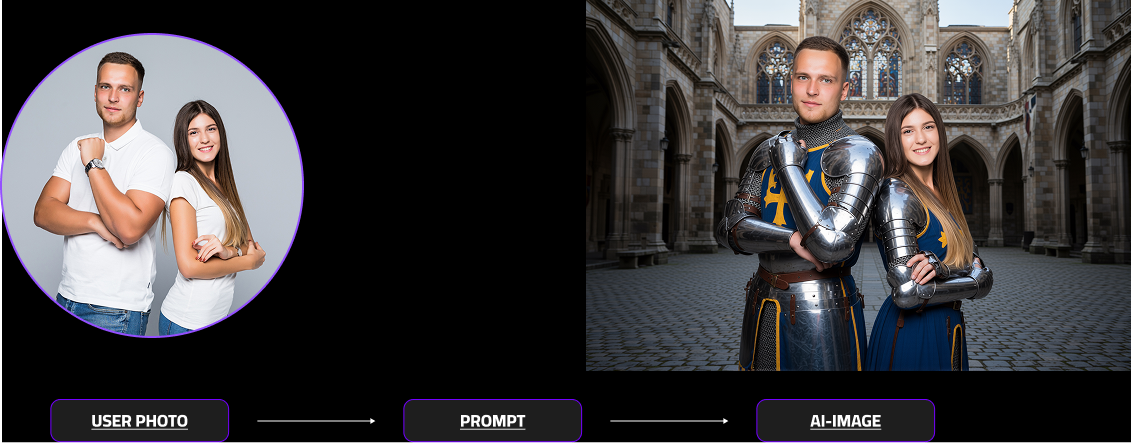
MultiSwap Text2Filter allows you to create personalized group filters through text prompts.
By simply describing the desired scene, style, or outfit, the AI automatically transforms up to five people in the image — while keeping their real faces, expressions, and poses perfectly intact.
What Kind of Images Can I Use?
Image Size
- Max side: 1200px
- Larger images = slower processing (not better quality)
- Very small images = loss of detail
Ratio: Defined by the Input photo
- Mutliswap does not offer the possibility to define the ratio in the output image.
- The Ratio gets defined by the Input photo
What Are the Prerequisites for the Input photo?
What Works Best
- Use well-lit photos (natural or soft studio light preferred)
- Keep heads facing forward or slightly angled
- Choose high-resolution images with clear facial details
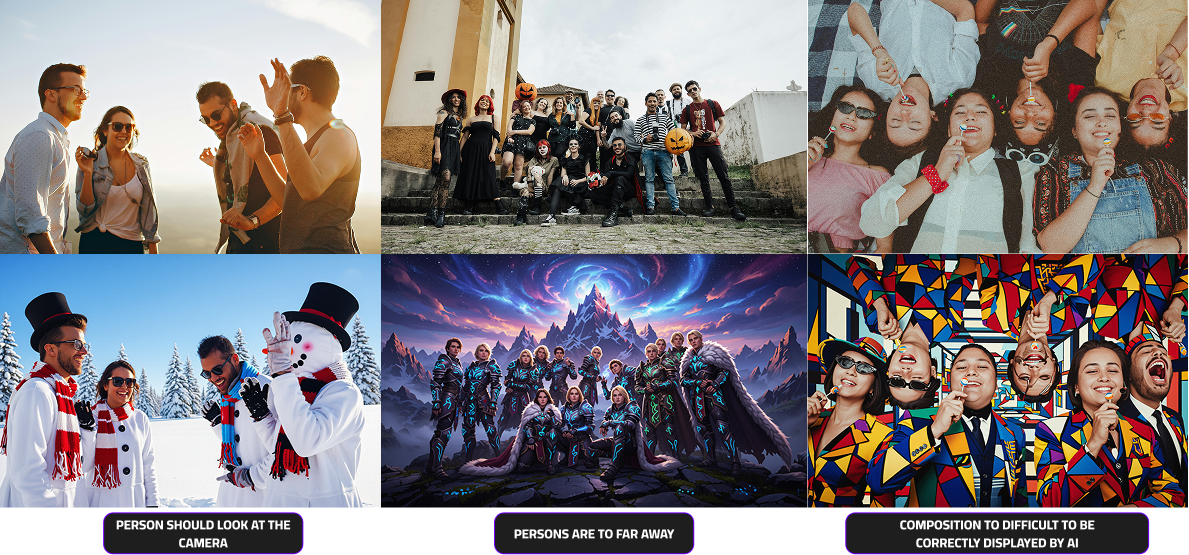
- Ensure all faces are fully visible — no obstructions, sunglasses, or hands
- Prefer close-up or medium upper-body shots for best identity retention
- Keep the group size between 1–5 people for consistent transformations
DON’Ts — Common Mistakes
- Blurry, pixelated, or low-resolution selfies
- Side profiles or extreme angles
- Harsh lighting or strong shadows
- Hats, masks, or filters covering faces
- Very wide shots where faces are too small to detect accurately
Aspect ratios with Multiswap
When using multiswap, your input image aspect ratio will define the AI output aspect ratio.
Depending on format and distance to camera, prompts may behave differently.
Always test your prompt in the intended production setup.
Advanced Settings Multiswap Realistic
Setting 1: Prompting Modes:
Mutliswap Text 2 Filter can be prompted in two different ways:
- Free prompting: The mode to completly freely create a new prompt structure (for advanced users!)
- Simplified: Enabels you to define only key parts of the prompt and provides the general structure for you (for beginner/ users just getting started)
Note: Enable the prompting structure by clicking on “Settings”
Setting 2: Outpainting (coming soon)
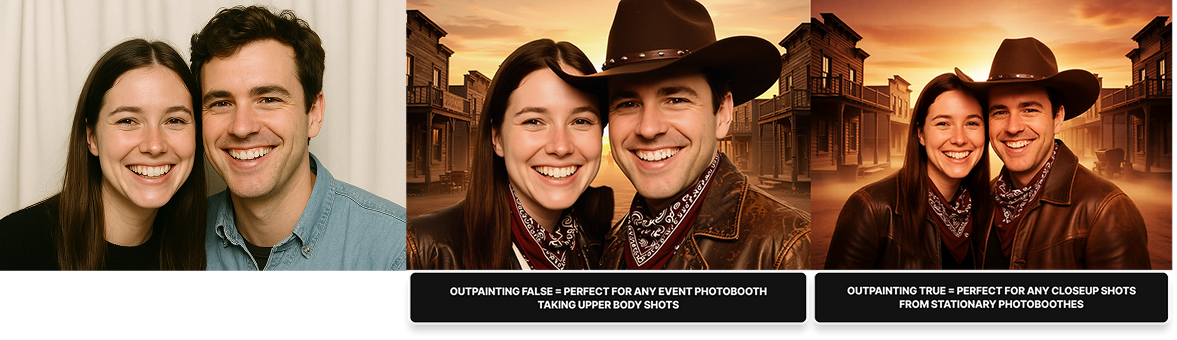
Outpainting in MultiSwap Realistic expands extremely close-up group photos by inferring the missing context — upper bodies, clothing, and surrounding details — to create a natural, wider scene.
- Only meant for true close-ups (photo booths or tight setups)
- Using it on regular portraits or medium shots can produce distorted outputs
Prompting: From Theory to Reality for Multiswap Realistic
🔧 Realistic Mode Prompt Structure - Formula:
“Preserve face and body from the image.
Place the subjects in [SCENE].
Dress them in [OUTFIT].
Apply [LIGHTING / MOOD].”
Example:
“Preserve face and body from the image. Place the subjects in [the Colosseum at sunset with banners and stone pillars], and dress them in [gladiator armor with no helmet]. Apply a [cinematic lightning].”
🎨 Stylized Mode Prompt Structure
Formula:
“Turn the image into a [ART STYLE] artwork with [TEXTURE / BRUSHWORK] and [COLOR PALETTE];
preserve faces and original pose; group-friendly.”
Example:
“Turn the image into a Van Gogh–style portrait with thick swirling brushstrokes and vibrant blue/yellow tones; preserve faces and original pose; group-friendly.”
Note:
Prompting in Multiswap should be approached holistically — prompting separate outfits for each subject is not recommended.
✅ Do (Multiswap-Correct)
- Keep prompts simple and focused
- Mention only environment, outfit, and overall mood
-
Use clear replacement phrasing
-
“Place the subjects in [SCENE]…”
- “Dress them in [OUTFIT]…”
- “Apply [LIGHTING]…”
-
Align your prompt with the existing pose and framing
-
Describe only what can actually change: scenery, wardrobe, atmosphere
❌ Don’t (Multiswap-Correct)
- Don’t describe new poses or actions — Multiswap does not modify body positions
- Don’t request new camera angles or perspectives — the original composition remains fixed
- Don’t assign different outfits to each person — one consistent wardrobe style recommended
- Don’t mix multiple scenes or unrelated concepts — stick to one environment & one outfit
Prompt Examples for Realistic/Stylized with different prompt modes
| Mode | Prompt Example | Prompt Mode | Scene Definition | Result (incl. In-/Output) |
|---|---|---|---|---|
| Realistic | Samurais at Ancient Temples | Simplified Mode | PLACE: Japanese samurai clothes without helmet CLOTHES / SCENE: Ancient Japanese temple shrine, epic scenery | 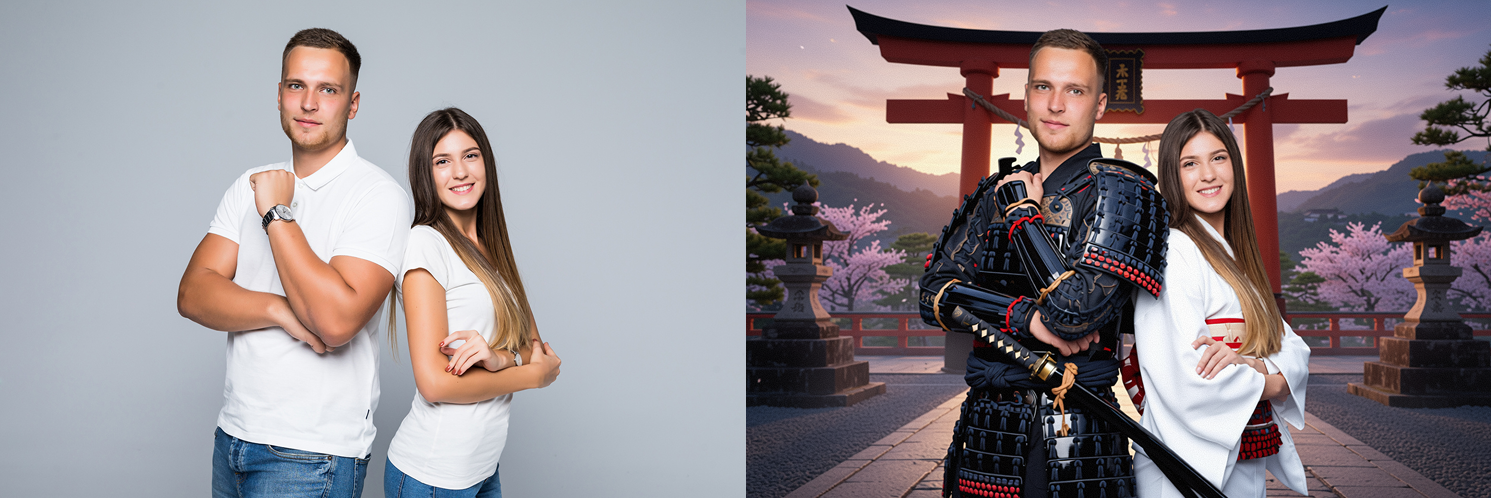 |
| Realistic | 1920 Mafia New York | Simplified Mode | PLACE: 1920s mafia suit look CLOTHES / SCENE: 1920 black & white New York street, oldtimer cars | 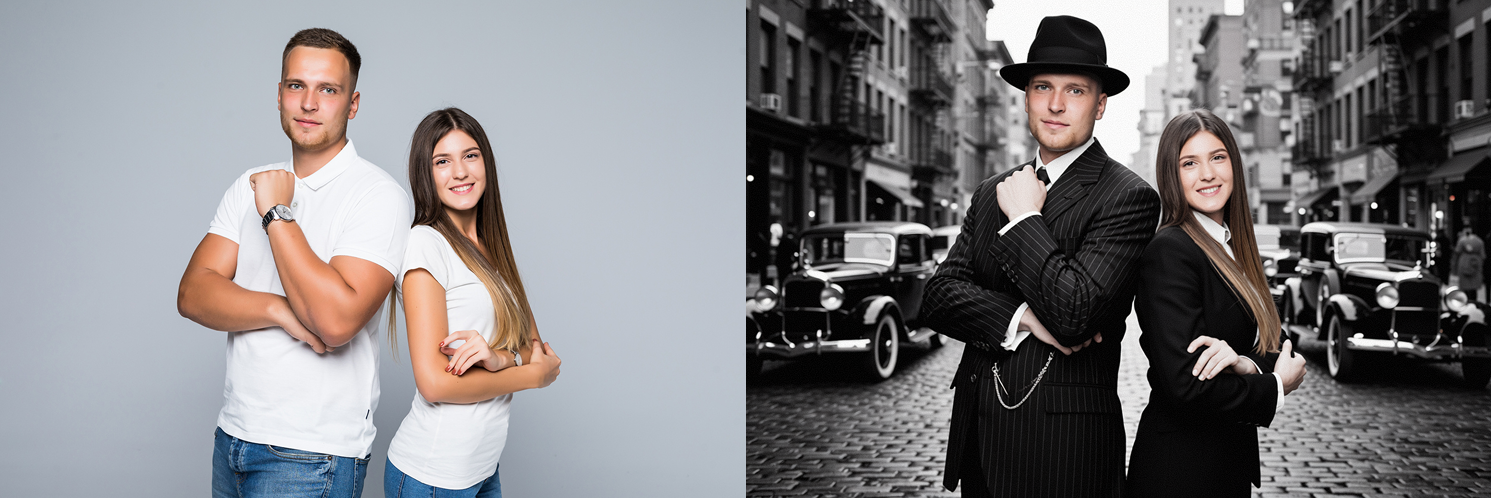 |
| Realistic | Fire Monk Casting Spells | Simplified Mode | PLACE: Blue monk coat casting flames in his hand, fireball between his hands CLOTHES / SCENE: Burning cyberpunk streets, burning buildings, Tokyo | 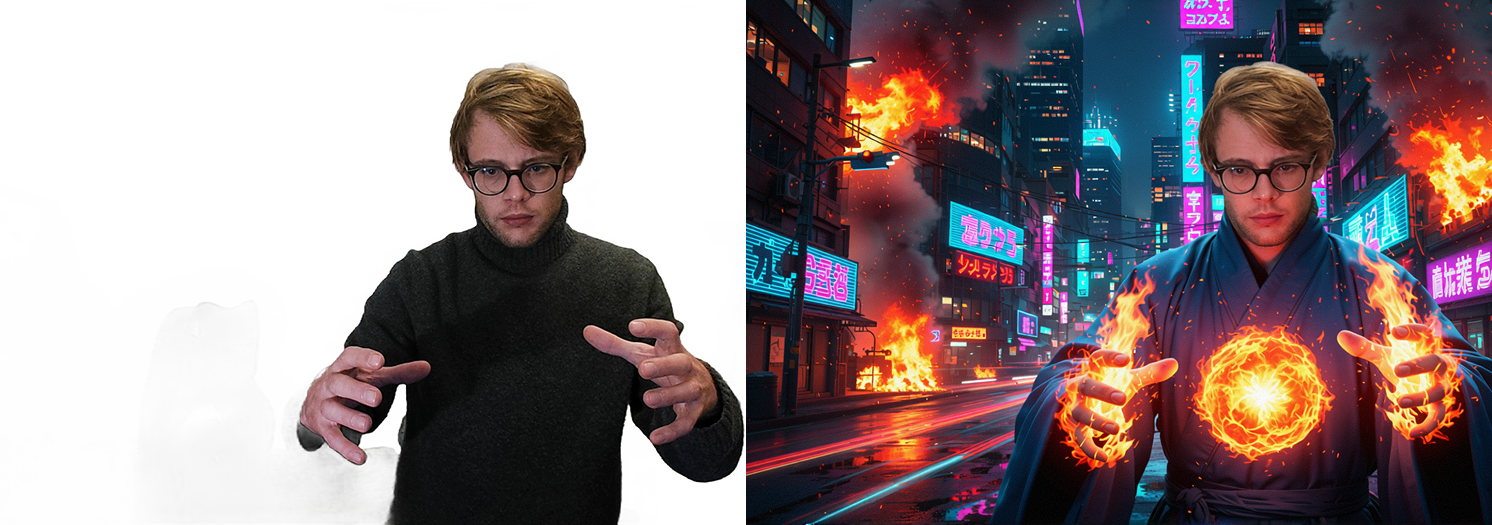 |
| Stylized | Van Gogh Painting | Prompt Free Mode | Turn the image into a Van Gogh-style portrait with thick swirling brushstrokes and vibrant blues/yellows; preserve faces and original pose; group-friendly | 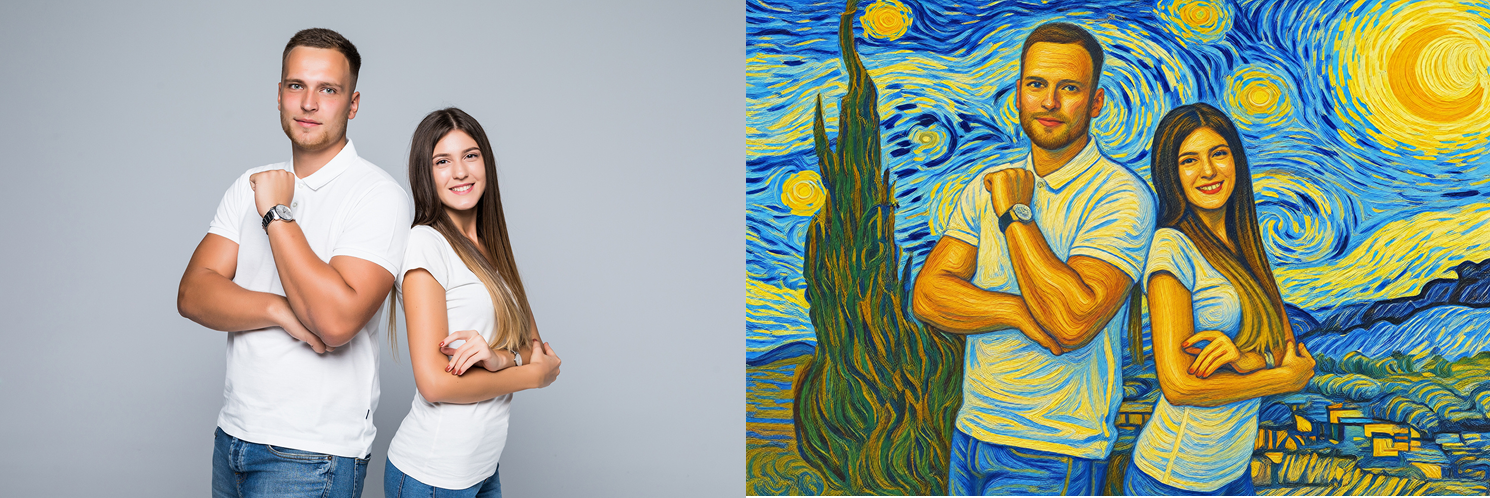 |
| Stylized | 3D Animation Style | Prompt Free Mode | Turn the photo into a playful 3D animated style with rounded features, glossy shading, and vibrant colors; preserve faces | |
| Stylized | Kawaii Sticker Collage | Prompt Free Mode | Turn the photo into a kawaii sticker collage with pastel colors, doodle stars and hearts, clean white cutout outline; preserve faces | 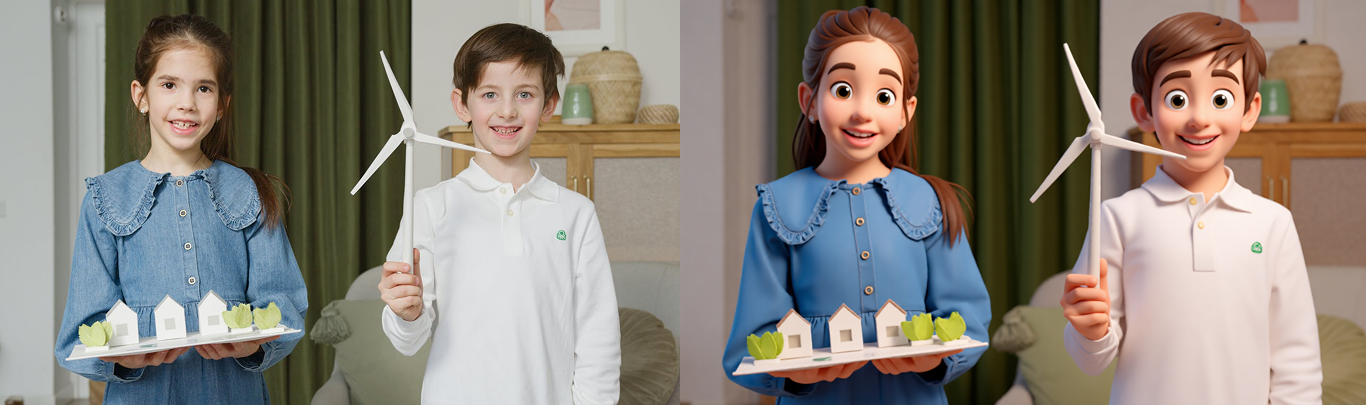 |
What are good input photos for Multiswap?
What are good input images?
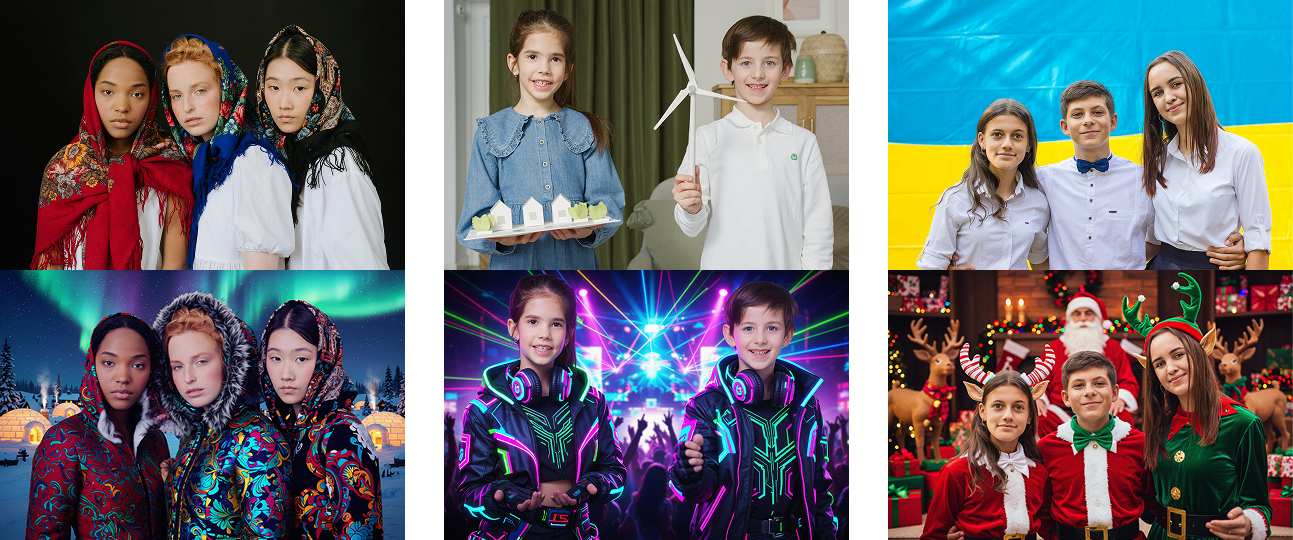
The quality of your result depends heavily on the quality of your input photo. Below are examples and tips to get the best results possible.
✅ DOs — What Works Best
- Use well-lit photos (natural light is ideal)
- Keep the head facing forward or slightly angled
- Choose high-resolution images (clear, sharp details)
- Ensure the face is fully visible (no sunglasses, hands, or obstructions) and makes up around 1/3 to 1/2 of the image, the more details are visible the better
- Close-up and upper-body medium shots ensure that the identities of all visible faces are well preserved
- Keep amount of people in the input images within 1–5 people for the best results
- 📸 See examples of good input photos to understand how to set it up
❌ DON’Ts — Common Mistakes
- Avoid blurry, pixelated, or low-resolution selfies
- Don’t use side profiles or extreme angles
- Skip photos with harsh lighting or strong shadows
- Avoid hats, filters, or obstructions covering the face
- Extreme wide-shot images where face details of the subjects can be lost
- 📸 See examples of bad input photos to understand what to avoid